- Crowdfunding hardware is a year-long wait with frequent delays; perks are modest and refunds are usually possible.
- Analogue 3D delivered premium quality but offered little early-backer advantage beyond ~$20 savings.
- Superstation One impressed with community-driven features, clear Discord updates, and upfront customs included.
About two years ago I started backing crowdfunding and open‑source projects. Not out of some grand philanthropic impulse, but because I reached a point where I understood that behind these projects there’s real work — not content manufactured for trends or sponsorships. And that work deserves support.
Being relatively new to all this — two years in — I figured it might be useful to share a bit of my experience now that I’ve gone through a few such projects.
The first thing to understand: this is a marathon, not a sprint
Backing a project from its early development stages on any platform, and waiting until you actually have the product in your hands, is a marathon. It’s worth setting your expectations from the start: the money you put in will, on average, turn into a product after about a year. What you see in the initial presentation is nowhere near a final, production‑ready device — at best it’s a partially functional prototype wrapped around an idea.
What does this long waiting period actually get you? In most cases, not a lot: the gratitude of the people behind the project, a few small perks (custom engravings, early access, and so on), and sometimes a slightly lower price than the final one. It’s not necessarily a deal breaker, but it’s not exactly spectacular either.
The announced timelines are often — I’d even say always — missed. Projects go through multiple delays before they reach a finished product, delays you can’t control and can’t really do anything about. To be fair, many projects do offer you an exit hatch: you can usually get a full refund if you run out of patience. Another thing to keep in mind is shipping — most packages come from Asia or the US, and depending on where the company is legally registered, you may or may not have to pay customs duties when they arrive.
Beyond all that, backing this kind of project is also a voluntary act toward the community. You’ve taken from the community — information, knowledge, resources — and now you’re giving something back.
Analogue 3D — premium quality, less about exclusivity
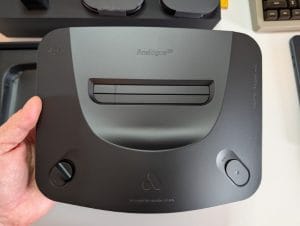
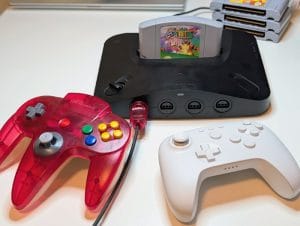
The first project I backed was the Analogue 3D console. The product was delivered a little over a year later, after roughly four delays compared to the original schedule.
As a product, it stayed very true to what was promised. Implementation, design, materials — everything feels premium. That was somewhat expected, given the company already had several high‑end products under its belt over the last six years.
The less pleasant part was availability. Over time, Analogue has built a brand around high quality and limited quantities, making its products almost exclusive and highly sought‑after once the short sales windows closed. Many people assumed the same would happen with the 3D. It seems, however, that Analogue has changed its strategy, ensuring sufficient stock after launch. In practice, someone who backed the project from day one and someone who ordered right after the official launch received their consoles at roughly the same time, with a price difference of about 20 dollars. If anyone was hoping for a real advantage or a sense of exclusivity for being there from the start — that didn’t really materialize.
Superstation One — a small project, but a smartly run one
The second project was the Superstation One console from Retroremake — a smaller, more niche developer than Analogue. I’ve had it for a little over a week and haven’t yet had time to test it in depth.
It took a bit more than a year from the moment I placed the order. First impressions are positive — you can tell it’s a product made by a small developer who paid close attention to what the community wanted when implementing features. A pleasant surprise was that customs duties were included in the initial price, so there were no extra payments on delivery.
Unlike Analogue, the team ran a dedicated Discord server where they actively communicated with backers and regularly posted project updates. Just like Analogue, they also offered the option to get your money back at any time if you no longer wanted to wait.
I’ll follow up with a separate article once I’ve properly put it through its paces.
Mecha Comet — a project I decided to walk away from
Another project I followed was Mecha Comet — a portable Linux computer with a ton of ports and expansion options. The idea of a portable device for white‑hat hacking started to take shape in my mind because of this project.
I tracked its progress on Discord and Kickstarter up to a point, then decided to pull out. The final specs of the entry‑level model were, performance‑wise, roughly on par with hardware from almost a decade ago. Combined with my experience with Analogue and Superstation One — where I could have just ordered after launch without any real downside — it no longer made sense to lock up money for a year with nothing tangible in return. If I change my mind, I can always order it after the final release.
Game Bub — the most interesting and the toughest project (for me)
One of the most interesting projects in my view was Game Bub — a portable Nintendo console recreated by a single person, who started with no specialized technical background and got there purely through intense self‑study. What made it even more impressive: after the project caught the attention of most major tech outlets worldwide, the creator decided to release it as open source on GitHub. It’s a great example of taking from the community and then giving back, especially in a world where online content is driven almost entirely by whoever pays.
Although the project was also available on Crowd Supply, I decided to take on something far more interesting — and incomparably harder than placing a simple order: to build the device myself based on the GitHub project.
Which is turning out to be much more difficult than it looks at first glance, as I’ve already discovered. I’ll go into detail about this project in a series of separate articles.
Honestly, after these experiences, I’ve come to the conclusion that you back a project because you like the idea and the people behind it — not because you expect some concrete advantage, since most of the time there isn’t anything truly significant in return.
The real gain doesn’t come from the money you put into a project, but from the experience and the learning that comes with doing something you’ve never done before. That can lead you, as in the case of Game Bub, to actually build it with your own hands. That’s what really stays with you.
Articles selected automatically based on the current article. Model: gpt-5